Mine Development
01Driving and supporting underground roadways and galleries that open up the coal seam for production.
Through the Amlabad block in the Eastern Jharia Area of District Bokaro, Jharkhand, Mangalam runs two commercial lines — underground coal across all four pits, and the coal bed methane held within the same seams — all under one operator.
The Amlabad block lies in the Jharia Coalfield — India's principal source of prime coking coal — within the Gondwana Barakar coal measures of the Damodar Valley. The coal is won underground by the bord-and-pillar method, and seam for seam it is prized washery-grade coking coal, the raw material of steel-making. The same seams hold coal bed methane; capturing it improves safety underground and adds a second energy stream. Every part of the work runs to the statutory rulebook — the Mines Act, the Coal Mines Regulations 2017 and DGMS oversight.
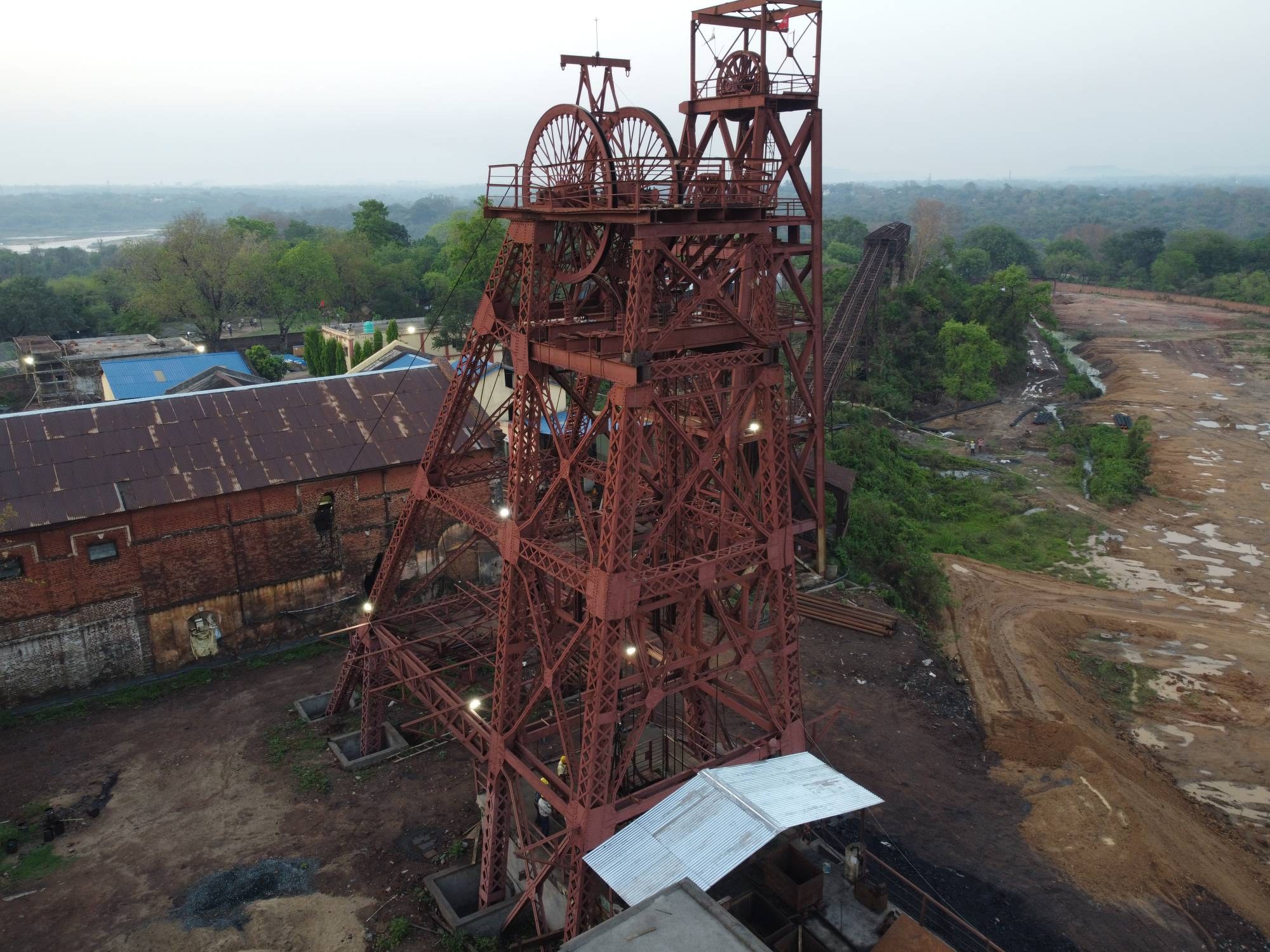
How underground coal is won in galleries and pillars — and the ground kept stable.
How it works →Washery grades W-I and W-II, and why prime coking coal is the raw material of steel.
Coal & grades →The gas held in the seams — a safety measure and a second energy stream.
The science →The Mines Act, CMR 2017 and DGMS — the statutory framework every mine works under.
The framework →Reviving a century-old colliery starts with knowing exactly what lies beneath it. We have rebuilt the Amlabad block as a full three-dimensional geological model — every seam floor, its thickness and the faulting between them — from historic borehole records and our own survey work. Drag to explore the sequence.
Built from our own geological model of the block — 19 seams reconciled across 40 boreholes, from historic drilling records and our own survey work. Shown as relative geometry only: deliberately not to scale, and carrying no depths, grades or real-world coordinates. An illustration of the deposit, not a survey document.
A colliery that ran for a century, fell silent, and is now being returned to production under a modern operating model.
Amlabad began winning coal from the Jharia Coalfield more than a hundred years ago. Its pit headframes are among the oldest working landmarks in the Eastern Jharia Area, Bokaro — and its seams among India’s finest prime coking coal.
After the guide rope of the No. 2 pit’s chute gave way, the colliery was stopped on safety grounds. It would stay shut for the better part of two decades.
For years the seams sat unworked while India imported the very grade of coking coal they hold — the raw material its steel plants depend on.
BCCL moved to bring the mine back through the mine developer & operator (MDO) model on a revenue-sharing basis, engaging Mangalam Coalfield Private Limited as the operator.
With the approvals and agreements in place, BCCL’s leadership directed the restart of Amlabad in MDO mode, targeting a return to production.
Reopened, Amlabad is set to supply prime coking coal across the 25-year mandate — import substitution for steel and energy security — with coal bed methane from the same seams as a second, cleaner stream.
On the founder’s 60th birth anniversary, the Mangalam Chikitsalaya opened at the colliery — free treatment for the workforce and the villages around it.
Timeline compiled from public press coverage of the Amlabad revival; see In the news. Specific production figures and internal plans are not published here.
Restoring the historic underground workings — Pit No. 1, 2, 3 and 4 — across revival, development and dewatering, to power India’s industrial growth through responsible coal.
Commercially capturing the methane held inside the coal seams — a cleaner energy stream from the same block, put to use rather than vented to the atmosphere.
Hover or tap a shaft to see the stage it has reached.
Historic underground working under revival as part of the Amlabad block restoration.
Four capabilities that run every working district to standard, shift after shift.
Driving and supporting underground roadways and galleries that open up the coal seam for production.
Shift-by-shift production, reconciliation and structured reporting across every working district.
DGMS-approved equipment and statutory testing that keep machinery safe and certified.
Operating to the Coal Mines Regulations 2017 and the Mines Act, with qualified officials in every position.
Here to help and inform — for anything official, please get in touch